Porcelain stoneware tile formats: a guide to choosing between aesthetics and functionality
In this article we explore the main tile formats available in porcelain stoneware, analysing their characteristics, applications and design potential.
The extreme density of porcelain stoneware gives rise to a range of further characteristics, which underpin the many advantages this material has to offer.
Porcelain stoneware has become synonymous with ceramic flooring and wall coverings thanks to its extraordinary technical qualities. In fact, it is the most advanced and high-performing type of ceramic — though not the only one. Let's explore what this term actually means, what this material is made of, and why it has achieved such remarkable success.
The term "porcelain stoneware" encompasses an entire category of products used in architectural finishing, spanning a wide range of characteristics, technical performances, formats and thicknesses. The adjective "porcelain" evokes the refinement of fine porcelain, such as that of Capodimonte and Limoges. As for the word "stoneware", it refers to the exceptional hardness achieved through the process of vitrification. Let's now take a closer look at the production process, of which this chemical-physical phenomenon is the very core.
What happens during the vitrification of ceramics? It all starts with a small number of natural raw materials, found in abundance in the upper layers of the Earth's crust. Clays, feldspars, kaolins and sand are selected according to precise chemical and physical properties, then ground down into a homogeneous powder. They are then milled in an aqueous solution and subsequently atomised: the resulting liquid slurry is injected into a large silo filled with extremely hot air, which evaporates the water and transforms the raw materials into a fine, almost impalpable powder.
This powder is then pressed into specially designed moulds and fired at extremely high temperatures (up to 1,250°C) for long enough to bring the raw materials close to their melting point. This triggers vitrification, which compacts the materials and gives porcelain stoneware its extreme hardness and virtually zero porosity.
The extreme density of porcelain stoneware gives rise to a range of further characteristics, which underpin the many advantages this material has to offer.
One of the key strengths of porcelain stoneware is its exceptionally high mechanical resistance. It withstands heavy foot traffic, impacts, scratches and heavy loads with ease. This makes it suitable not only for residential settings, but also for public spaces, shops, offices and high-traffic areas. Unlike many natural materials, porcelain stoneware does not warp, expand or deteriorate over time. It retains its aesthetic and functional properties even when exposed to thermal fluctuations, moisture or direct sunlight.
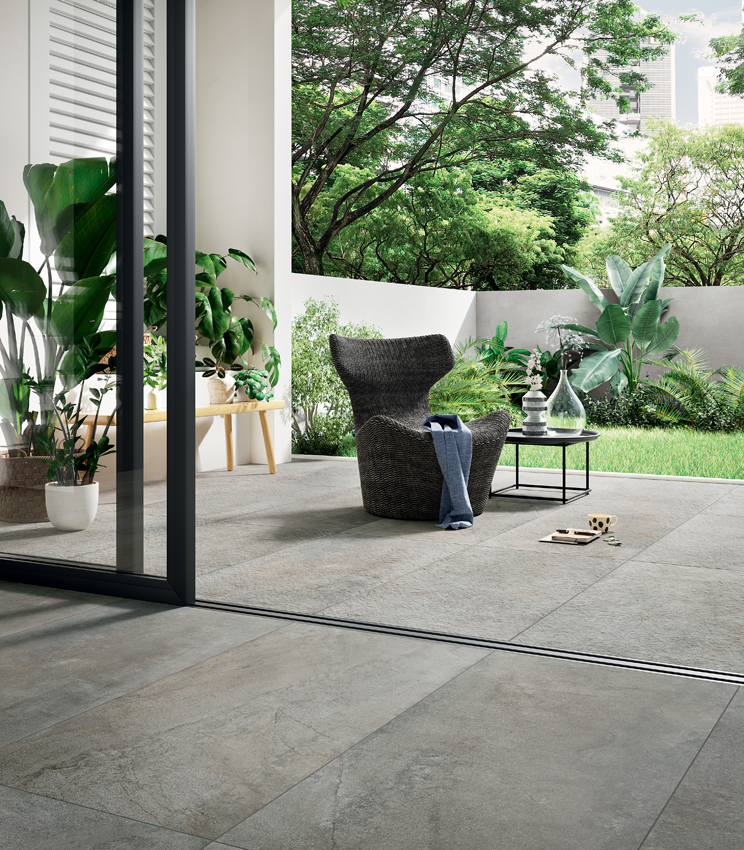
Porcelain stoneware is known for its extremely low water absorption rate (below 0.5%). This makes it waterproof and therefore frost-resistant, as well as suitable for wet environments and outdoor spaces. Thanks to this property, it is an ideal choice for bathrooms, kitchens, spas, swimming pools, terraces and façades, ensuring safety and reliability even in demanding environmental conditions.
Another major advantage of porcelain stoneware is how easy it is to maintain. Its dense structure prevents the absorption of liquids, stains and oily substances, making it simple to clean and highly hygienic — ideal even for sensitive environments such as kitchens and bathrooms. For routine cleaning, water and a mild detergent are all that is needed, with no requirement for protective treatments, waxes or specialist products over time.
Porcelain stoneware is a high-performance material also in terms of safety. Specific finishes are available with high slip resistance, making them ideal for outdoor areas, wellness spaces and environments where water is present. Porcelain stoneware is non-combustible and resistant to most chemical agents, a property that makes it well suited to industrial and commercial settings as well.
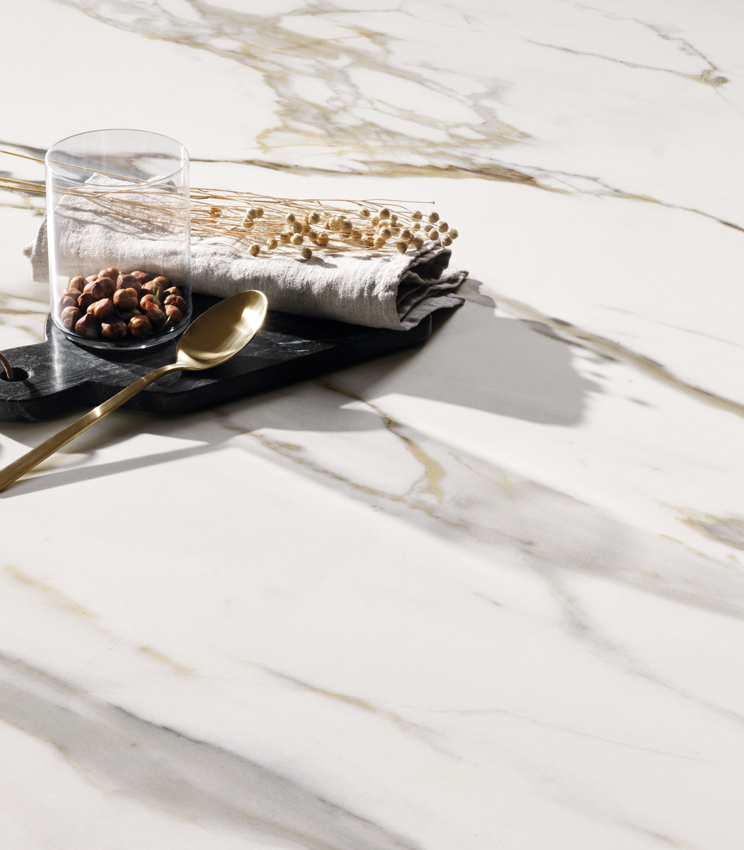
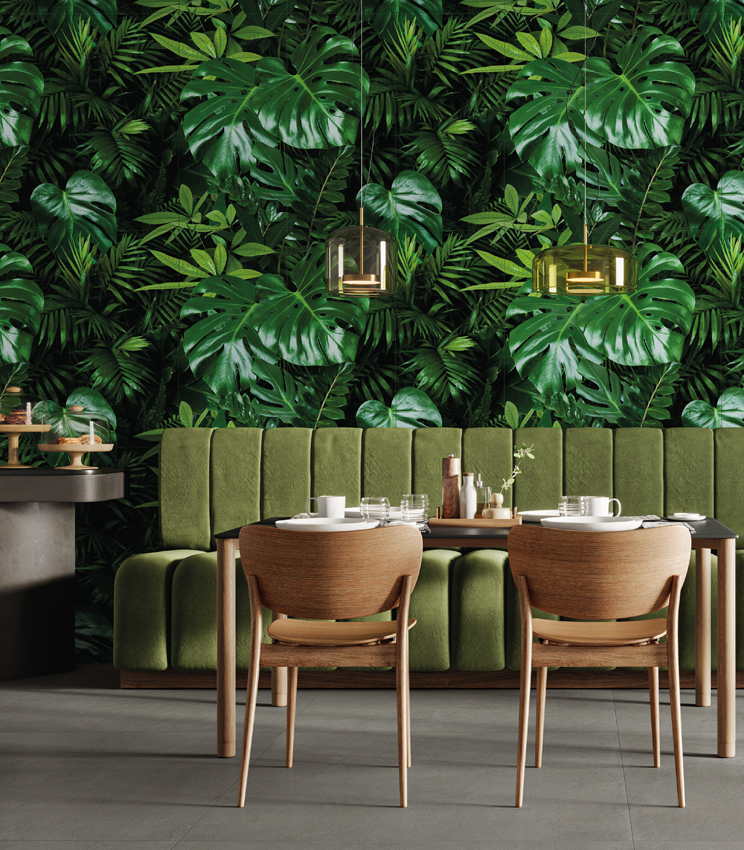
At this point, one might wonder: what is the difference between porcelain stoneware and ceramic? Although the two terms are sometimes used interchangeably, porcelain stoneware represents a true evolution of ceramic. From the very beginning, it demonstrated performance far superior to terracotta, single-fired, double-fired and clinker tiles. Its improved aesthetic appeal extended its use well beyond purely "technical" applications, making it the best-selling ceramic type on the market — and gradually reducing demand for other ceramic varieties.
As already mentioned, porcelain stoneware itself encompasses a range of ceramic technologies developed in recent years, all stemming from the fundamental innovation of raw material vitrification:
All of these production technologies share the vitrification process described above. They are often found side by side within the same collection, allowing a single product range to meet a wide variety of application needs.
Let's take a closer look at the ceramic technologies we have just discussed, noting that thickness is the primary distinguishing factor.
This is the standard stoneware format, with a thickness of 9 or 10 mm, produced by pressing raw materials into moulds that typically correspond to the largest sizes available in the catalogue. Smaller formats are then cut from these larger slabs.
To be suited to the most demanding outdoor applications, stoneware must feature an increased thickness (generally 20 mm) and special surface finishes with a high degree of slip resistance. Thanks to these characteristics, outdoor stoneware is ideal for raised flooring systems and driveways, as well as pool surrounds and dry-laid pathways over grass, sand or gravel — as explored in our dedicated guide to anti-slip outdoor flooring.
This type of stoneware is produced through a special manufacturing process that yields large-format slabs (up to 100x300 cm and 120x278 cm) with an extremely reduced thickness (from 3.5 to 6 mm). It is precisely this slimness that makes this product type so versatile, opening it up to a wide range of application fields, including interior design and furniture.
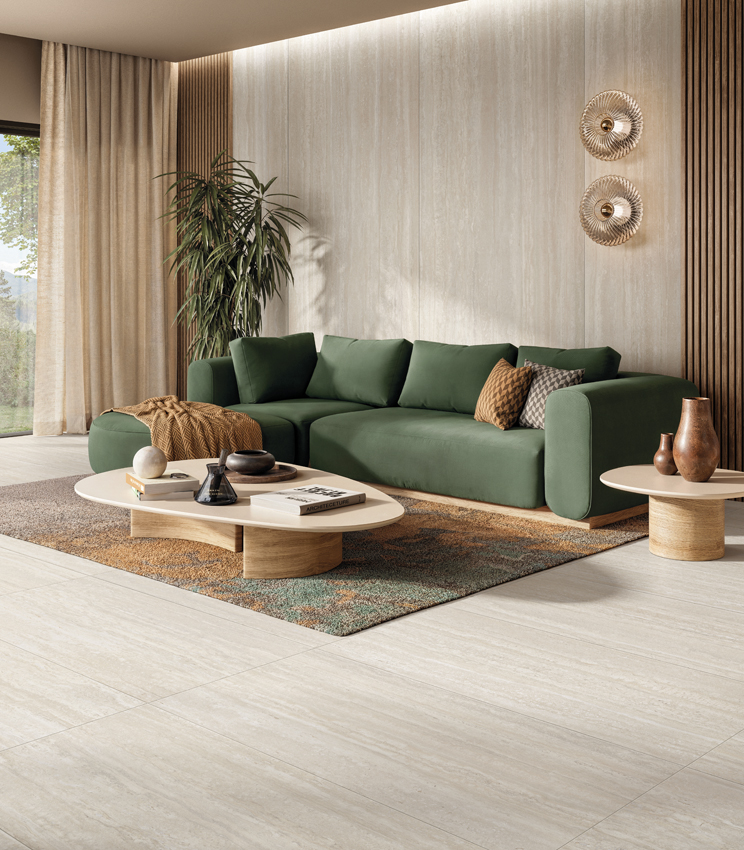
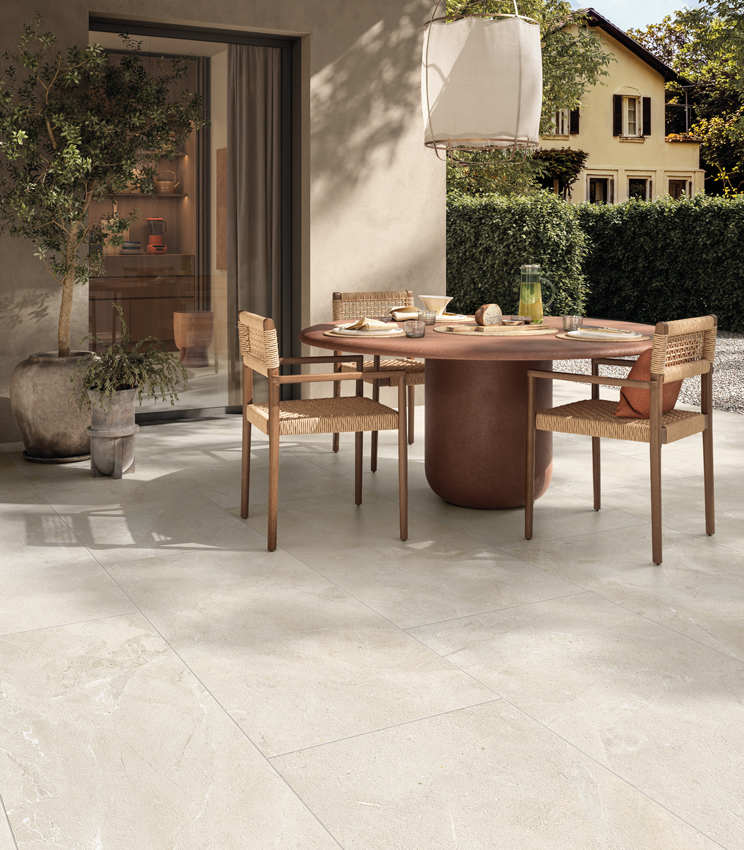
Panaria's extensive catalogue features all the types of stoneware we have explored. It is worth noting that these ceramic technologies are often combined within the same collection, multiplying the application possibilities of each product. Here are some recent collections well worth discovering, along with the technologies they incorporate.